
Beginner’s Guide to Korean Skincare
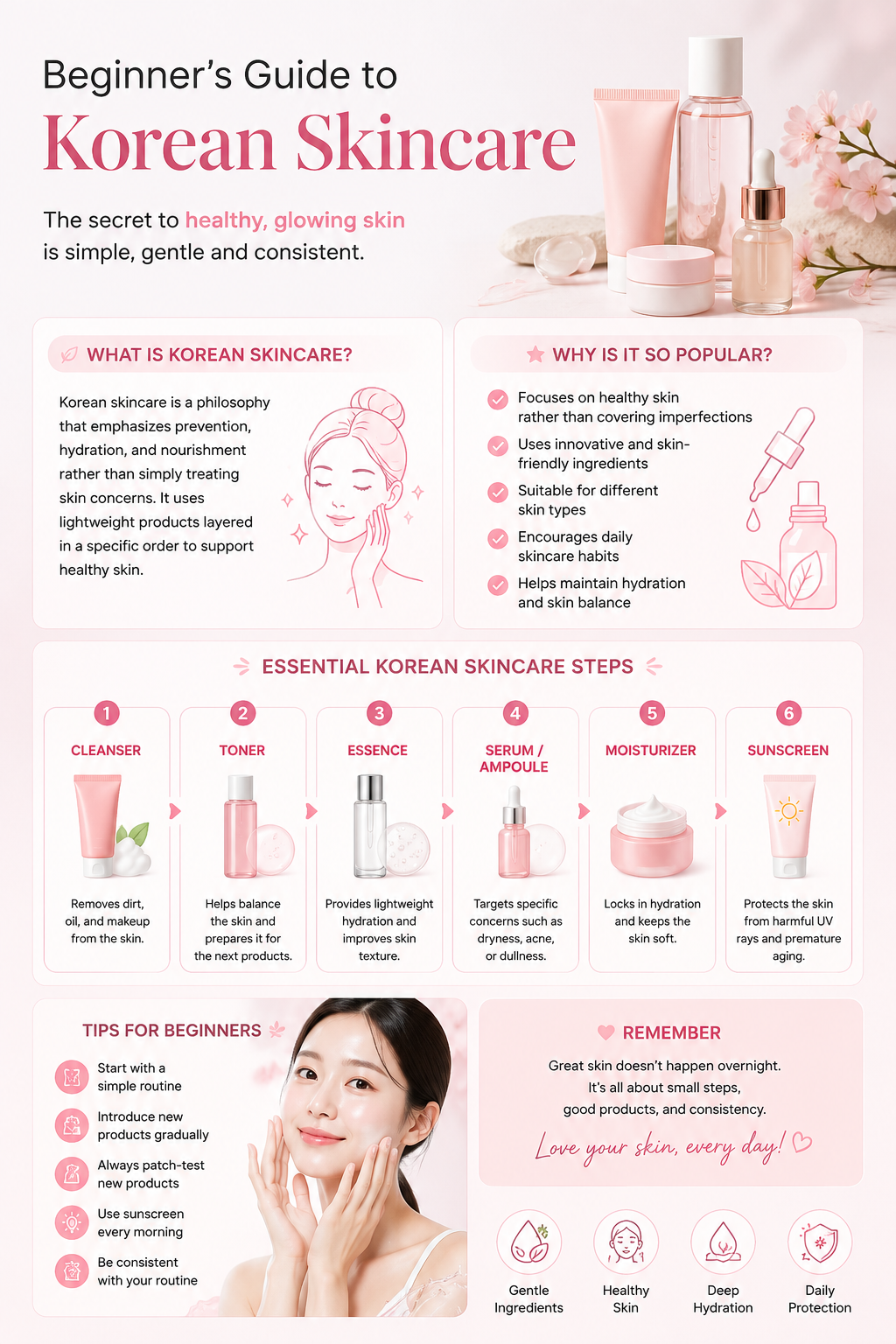
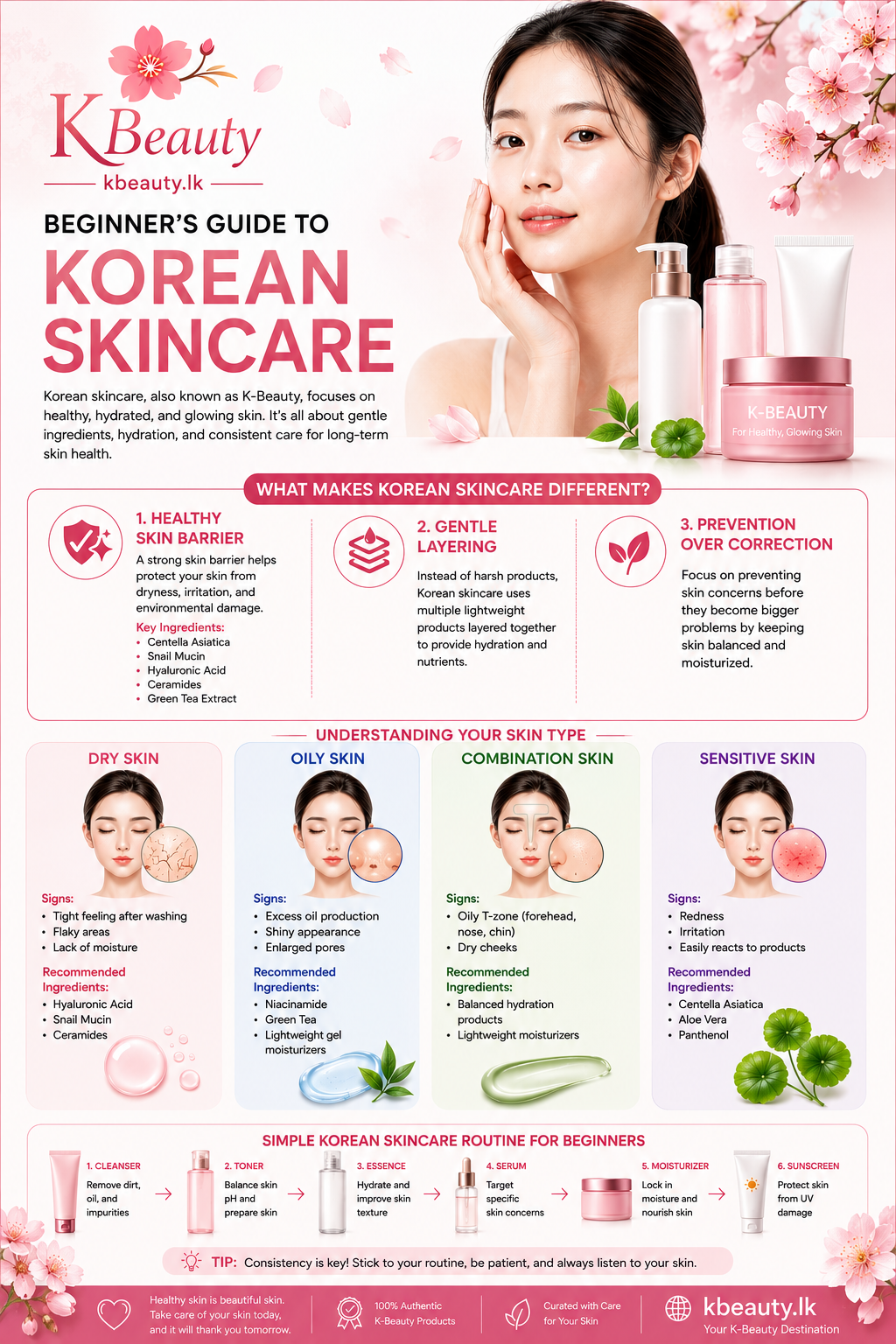
Korean skincare, also known as K-Beauty, has become one of the most popular beauty trends worldwide. It focuses on achieving healthy, hydrated, and glowing skin through gentle products and consistent skincare habits. Unlike routines that only treat skin problems, Korean skincare emphasizes prevention, nourishment, and long-term skin health. Whether you have dry, oily, combination, or sensitive skin, K-Beauty offers products and techniques that can help improve your skin’s appearance and maintain a natural, radiant glow. This beginner’s guide will help you understand the basics of Korean skincare and how to start a routine that works for you.
Korean skincare, also known as K-Beauty, focuses on achieving healthy, hydrated, and glowing skin through gentle products and consistent care. Unlike traditional routines that only target skin concerns, Korean skincare emphasizes prevention, nourishment, and long-term skin health. By following simple steps such as cleansing, toning, moisturizing, and daily sun protection, beginners can build an effective skincare routine suitable for their skin type.
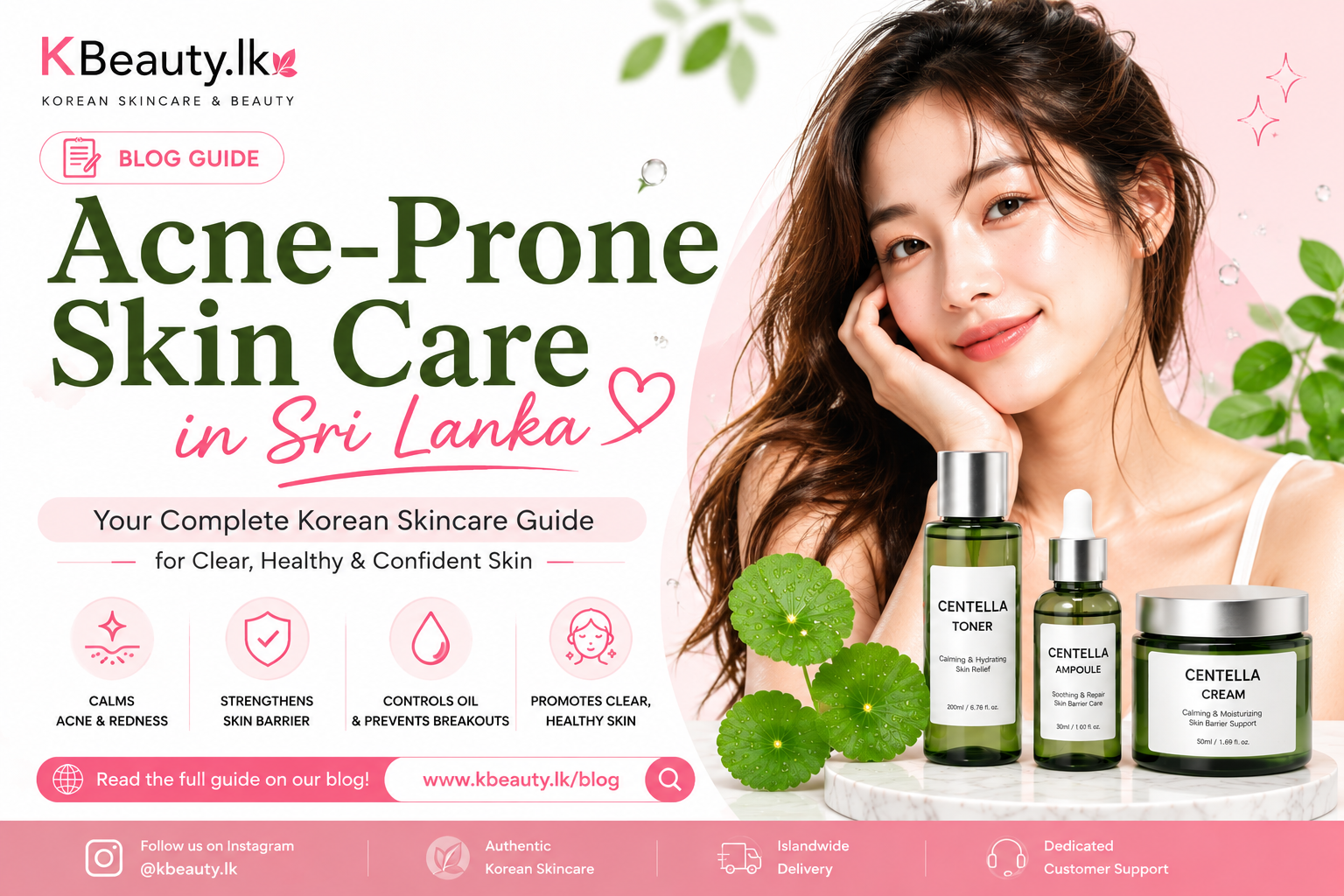
Acne-Prone Skin in Sri Lanka: The Complete Korean Skincare Guide for Clear, Healthy Skin
Introduction
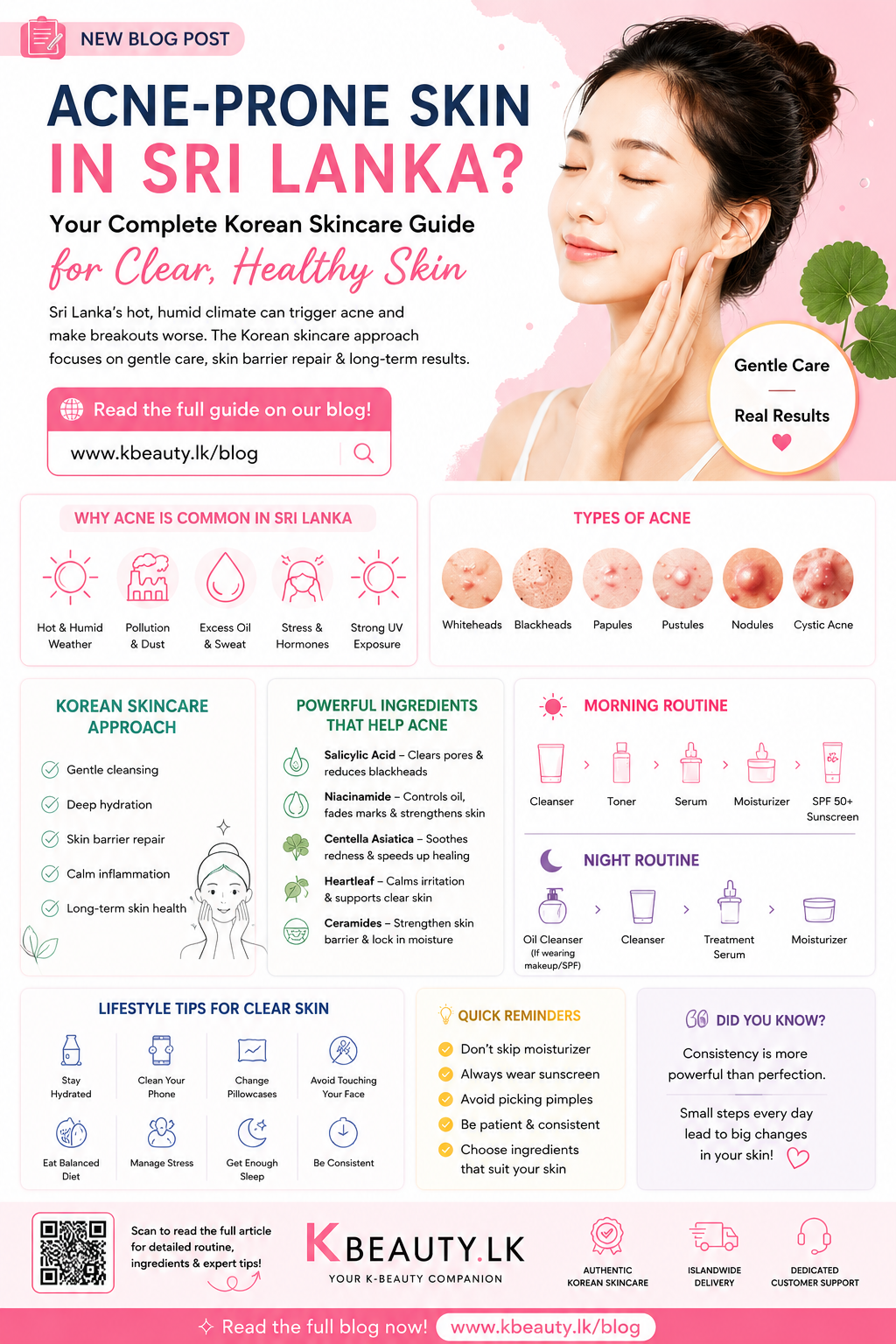
Acne is one of the most common skin concerns affecting teenagers and adults across Sri Lanka. Whether you’re living in the busy streets of Colombo, the coastal areas of Galle, or the hill country of Kandy, the country’s hot and humid tropical climate can make breakouts more frequent and difficult to manage. Excessive sweating, increased oil production, pollution, and prolonged sun exposure all contribute to clogged pores and irritated skin.
Many people try harsh cleansers, DIY remedies, or products that promise overnight results. While these may provide temporary improvement, they often damage the skin’s protective barrier, leading to even more redness, dryness, and recurring breakouts.
This is where Korean skincare has changed the way people care for acne-prone skin. Rather than focusing only on drying out pimples, Korean skincare emphasizes gentle cleansing, deep hydration, skin barrier repair, and carefully selected ingredients that help calm inflammation while supporting the skin’s natural healing process.
In this comprehensive guide, you’ll learn why acne is common in Sri Lanka, what causes different types of breakouts, which Korean skincare ingredients actually work, and how to build an effective daily routine using authentic Korean skincare products available at KBeauty.lk.
Understanding Acne
Acne is a skin condition that develops when hair follicles become blocked by excess sebum (oil), dead skin cells, and bacteria. While acne is often associated with teenagers, it can affect people of all ages. Hormonal fluctuations, genetics, stress, lifestyle habits, and environmental factors all influence how frequently breakouts occur.
In Sri Lanka, environmental conditions often make acne more persistent. High humidity encourages increased oil production, while sweat mixes with sunscreen, makeup, and airborne pollution, creating an environment where pores can become congested more easily.
Understanding the underlying causes of acne is the first step toward selecting products that work with your skin rather than against it.
Why Acne Is So Common in Sri Lanka
Sri Lanka’s tropical climate creates unique challenges for maintaining healthy skin.
Hot and Humid Weather
Humidity stimulates sebaceous glands to produce more oil. Excess sebum mixes with sweat and dead skin cells, increasing the likelihood of clogged pores and acne.
Constant UV Exposure
Strong sunlight can trigger inflammation, worsen acne marks, and weaken the skin barrier when adequate sun protection is not used.
Pollution
Urban environments expose skin to dust, smoke, and pollutants that settle on the skin throughout the day. Without proper cleansing, these particles contribute to congestion and irritation.
Stress and Lifestyle
Busy work schedules, poor sleep, and stress hormones can all influence oil production and inflammation, making acne more difficult to control.
Types of Acne
Not every breakout is the same. Identifying your acne type helps you choose the right skincare routine.
Whiteheads
Small bumps that remain closed beneath the skin surface.
Blackheads
Open pores filled with oil that darken due to oxidation.
Papules
Small red inflamed bumps that may feel tender.
Pustules
Inflamed pimples containing visible pus.
Nodules
Large, painful bumps beneath the skin that require careful treatment.
Cystic Acne
Deep, severe breakouts that can leave permanent scarring if not treated appropriately.
Common Mistakes That Make Acne Worse
Many people unknowingly damage their skin while trying to eliminate acne quickly.
Common mistakes include:
- Washing the face too often
- Using harsh physical scrubs
- Picking or squeezing pimples
- Skipping moisturizer because skin feels oily
- Not wearing sunscreen
- Mixing multiple active ingredients without guidance
- Frequently changing skincare products
Healthy skin requires consistency rather than aggressive treatment.
Why Korean Skincare Works for Acne-Prone Skin
Ingredients That Help Acne-Prone Skin
Choosing products by ingredient rather than marketing claims often leads to better results.
Salicylic Acid
Helps dissolve excess oil inside pores and reduce blackheads and whiteheads.
Best for:
- Oily skin
- Congested pores
- Mild acne
One reason Korean skincare has become so popular worldwide is its focus on maintaining a healthy skin barrier while treating specific concerns.
Instead of stripping away natural oils, Korean skincare routines aim to balance hydration, reduce inflammation, and support long-term skin health.
This gentle philosophy is especially beneficial for people living in Sri Lanka, where daily exposure to heat and humidity can leave skin stressed and dehydrated despite appearing oily.
Niacinamide
A versatile ingredient that regulates oil production, reduces redness, and strengthens the skin barrier.
Best for:
- Oily skin
- Acne marks
- Enlarged pores
Centella Asiatica
Known for its soothing and repairing properties, Centella helps calm irritation and supports skin recovery.
Best for:
- Sensitive skin
- Redness
- Inflamed acne
Heartleaf Extract
Heartleaf is widely used in Korean skincare for calming sensitive, acne-prone skin while helping reduce visible redness.
Best for:
- Sensitive skin
- Daily soothing care
Ceramides
Ceramides strengthen the skin’s natural barrier and help prevent moisture loss, reducing irritation caused by acne treatments.
Morning Routine
A simple morning routine may include:
- Gentle Cleanser
- Hydrating Toner
- Niacinamide Serum
- Lightweight Moisturizer
- SPF 50+ Korean Sunscreen
Evening Routine
At night, focus on removing impurities and supporting skin repair.
- Oil Cleanser (if wearing sunscreen or makeup)
- Water-Based Cleanser
- Treatment Serum
- Moisturizer
Lifestyle Habits That Support Healthy Skin
Your skincare routine works best when combined with healthy daily habits.
- Drink enough water throughout the day.
- Wash pillowcases regularly.
- Clean your phone screen often.
- Avoid touching your face unnecessarily.
- Eat a balanced diet rich in fruits and vegetables.
- Manage stress through regular exercise or relaxation techniques.
- Get adequate sleep each night.
Recommended Korean Skincare Routine from KBeauty.lk
When choosing products, focus on ingredients that suit your skin type rather than following trends.
A beginner-friendly routine may include:
- Low-pH Cleanser
- Hydrating Toner
- Centella or Heartleaf Serum
- Lightweight Gel Moisturizer
- Broad-Spectrum SPF 50+ Sunscreen
At KBeauty.lk, you’ll find a carefully selected range of authentic Korean skincare products designed to help address acne-prone, oily, sensitive, and combination skin. Whether you’re building your first skincare routine or looking to upgrade your current one, choosing products with proven ingredients can make a noticeable difference over time.
Frequently Asked Questions
Can Korean skincare help acne?
Yes. Korean skincare focuses on gentle cleansing, hydration, and skin barrier repair while using ingredients such as Salicylic Acid, Niacinamide, and Centella Asiatica to support clearer-looking skin.
How long does it take to see results?
Most people notice improvements within 4–8 weeks of using a consistent skincare routine, although results vary depending on the severity of acne and individual skin type.
Should oily skin use moisturizer?
Absolutely. Skipping moisturizer can cause the skin to produce even more oil. Lightweight, non-comedogenic moisturizers help maintain a healthy skin barrier.
Is sunscreen necessary for acne-prone skin?
Yes. Daily sunscreen helps prevent acne marks from becoming darker and protects the skin from UV damage.